
For decades, buying enterprise software was relatively straightforward.
Need a CRM for 100 salespeople? Buy 100 licences.
Need a service platform for 500 agents? Buy 500 licences.
Technology costs scaled alongside headcount, making forecasting and budgeting relatively predictable.
Today, that model is evolving.
As organisations invest in AI, automation, integrations and data platforms, software value is becoming increasingly disconnected from the number of people logging into a system. Instead, it’s being driven by workflows, APIs, data processing, AI interactions and autonomous agents operating around the clock.
The question is no longer simply:
“How many users do we have?”
The question is becoming:
“How much technology are we consuming?”
The Rise of Consumption
Across the software industry, vendors are increasingly introducing pricing models based on usage rather than access.
Whether it’s AI prompts, API calls, workflow executions, data processing, storage volumes or agent interactions, organisations are paying for what their platforms do rather than simply who uses them.
This shift reflects how modern businesses now operate.
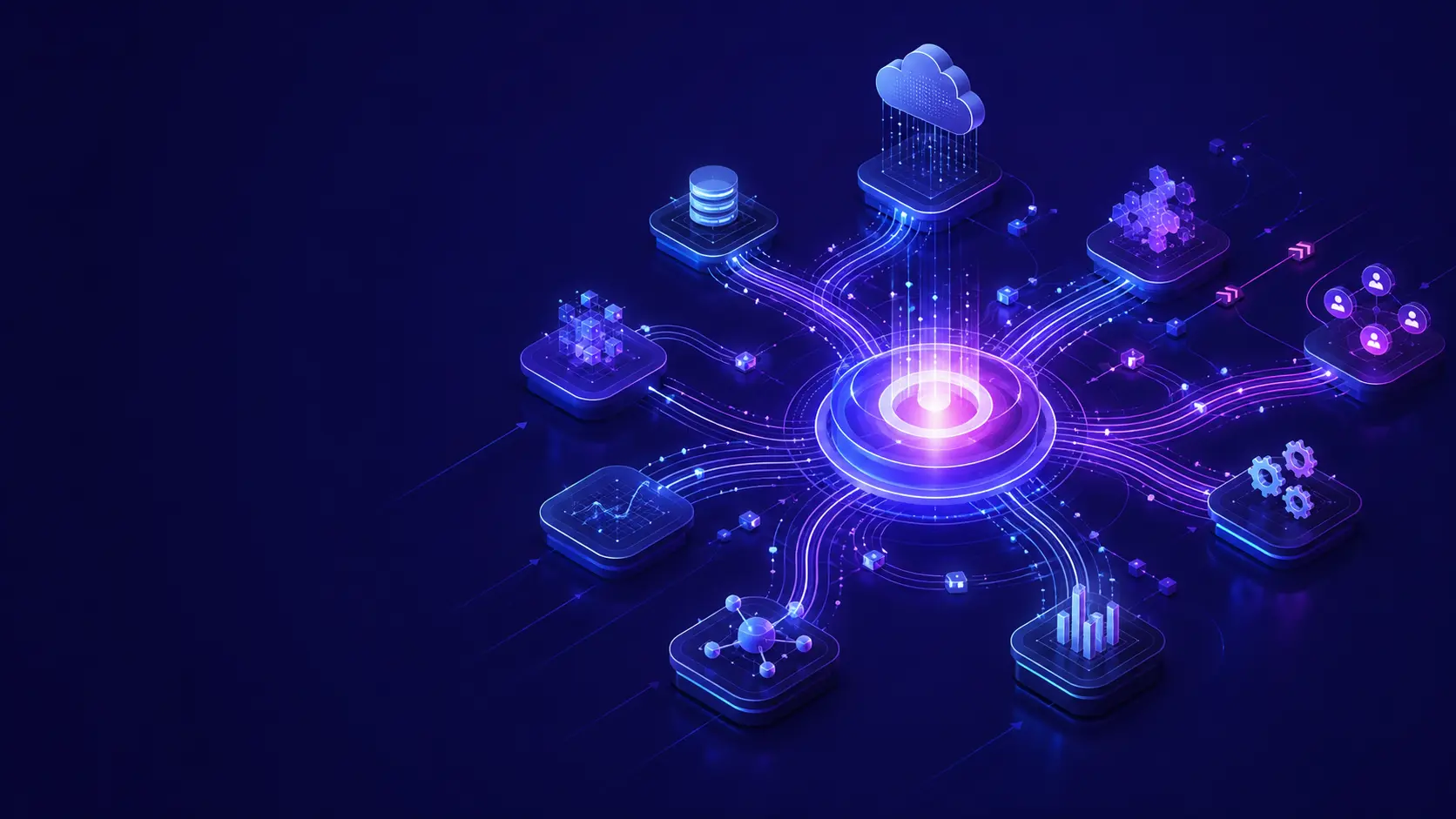
A single customer interaction might update a CRM record, trigger an integration, activate a marketing journey, process data through a customer data platform, invoke an AI model and refresh reporting dashboards—all within seconds.
What appears to be one action from a customer can generate consumption across multiple technologies behind the scenes.
The value being created is no longer tied to users.
It’s tied to outcomes.
AI Is Accelerating the Shift
Artificial Intelligence is perhaps the biggest driver behind this change.
Organisations are rapidly deploying AI-powered sales assistants, service agents, reporting agents, marketing agents and autonomous workflows. These systems can process thousands of interactions without a human ever logging into a platform.
As a result, software vendors are introducing AI flex credits, agent-based pricing, token consumption models and usage allowances that better align cost with value delivered.
While this may feel new to many business leaders, technology teams have operated this way for years through cloud platforms such as Amazon Web Services, Microsoft Azure and Google Cloud.
What’s changing is that these same principles are now moving into customer-facing and business-facing platforms, making consumption a topic that extends far beyond the CIO’s office.
Why Salesforce Customers Should Care
Salesforce provides one of the clearest examples of how enterprise software is evolving beyond traditional licensing.
How Consumption Flows Across the Technology Stack
A single customer interaction can create activity across multiple connected platforms.
Consumption occurs at every stage — through data movement, AI interactions, workflow execution and system integration.
While core CRM capabilities continue to be licensed by user, many of Salesforce’s newest innovations are increasingly consumption-led.
This includes:
- Agentforce conversations and AI interactions
- Data 360 data ingestion, storage and activation
- Marketing engagement and customer journey execution
- API activity and integration volumes
- Analytics processing and reporting workloads
As organisations scale AI and automation, consumption can grow significantly faster than headcount.
A business may add 10% more employees while experiencing a 200% increase in AI interactions, workflow executions or data processing.
This is why understanding consumption before deployment is becoming increasingly important.
The most successful organisations don’t simply ask:
“How much will Agentforce or Data 360 cost?”
They ask:
- Which use cases will deliver the greatest business value?
- How much consumption will those use cases generate?
- How should solutions be architected to scale efficiently?
- How will ROI be measured as adoption grows?
With the right strategy, consumption becomes an accelerator for growth rather than a source of unexpected cost.
Consumption Is Really an Architecture Challenge
One of the biggest misconceptions about consumption is that it exists within a single platform.
It doesn’t.
Most organisations operate complex ecosystems spanning CRM, ERP, data platforms, integration tools, analytics solutions and AI services. Every workflow, API call, integration and data movement contributes to overall consumption.
Poor architecture can create unnecessary costs through duplicate processing, redundant integrations and excessive data movement.
Well-designed architectures, on the other hand, maximise value while minimising waste. This is why many organisations begin with a structured Strategy & Roadmap exercise to understand future-state architecture, integration patterns and AI adoption requirements before committing to large-scale investment.
This is why consumption should never be viewed purely as a commercial or procurement exercise.
It’s an architecture, interoperability and governance challenge.
How to Evaluate Consumption Before It Becomes a Problem
At Trigg Digital, we’re increasingly seeing organisations ask the same questions:
- How much AI consumption should we expect?
- What happens when automation scales?
- Where are our biggest cost drivers?
- How do we forecast future usage?
- Are we creating business value or simply generating activity?
The answer starts with understanding both the technical and commercial implications of your use cases before large-scale deployment.
Consumption at Scale
A business may grow headcount by 10%, while AI interactions, workflow executions and data processing increase by 200%.
This is why consumption needs to be modelled before AI and automation are scaled across the enterprise.
Whether you’re evaluating Agentforce, Data 360, AI adoption, integration modernisation or broader digital transformation initiatives, organisations should focus on:
- Identifying the highest-value use cases
- Forecasting future consumption scenarios
- Modelling costs and ROI
- Designing scalable architectures
- Establishing governance and optimisation frameworks
Consumption isn’t something to think about after implementation.
It’s something that should be designed into your strategy from day one.
The Future Belongs to Organisations That Understand Consumption
The future of SaaS isn’t about abandoning traditional licensing altogether.
It’s about recognising that software value is increasingly being created through agents, workflows, APIs, automation and data processing—not just human users.
The organisations that understand how to measure, manage and optimise consumption will be best positioned to scale AI, control costs and maximise the return on their technology investments.
Because the most important question is no longer:
“How many licences do we need?”
It’s:
“How do we maximise the value we’re consuming?”
Speak to the Experts
At Trigg Digital, we help organisations evaluate use cases, model consumption, forecast costs, design scalable architectures and ensure investments deliver measurable business value through our Data & AI Readiness Assessment, architecture reviews and strategic advisory services.
Whether you’re planning your first AI initiative or scaling an enterprise-wide transformation, the right visibility and planning can make the difference between uncontrolled consumption and sustainable growth.
