
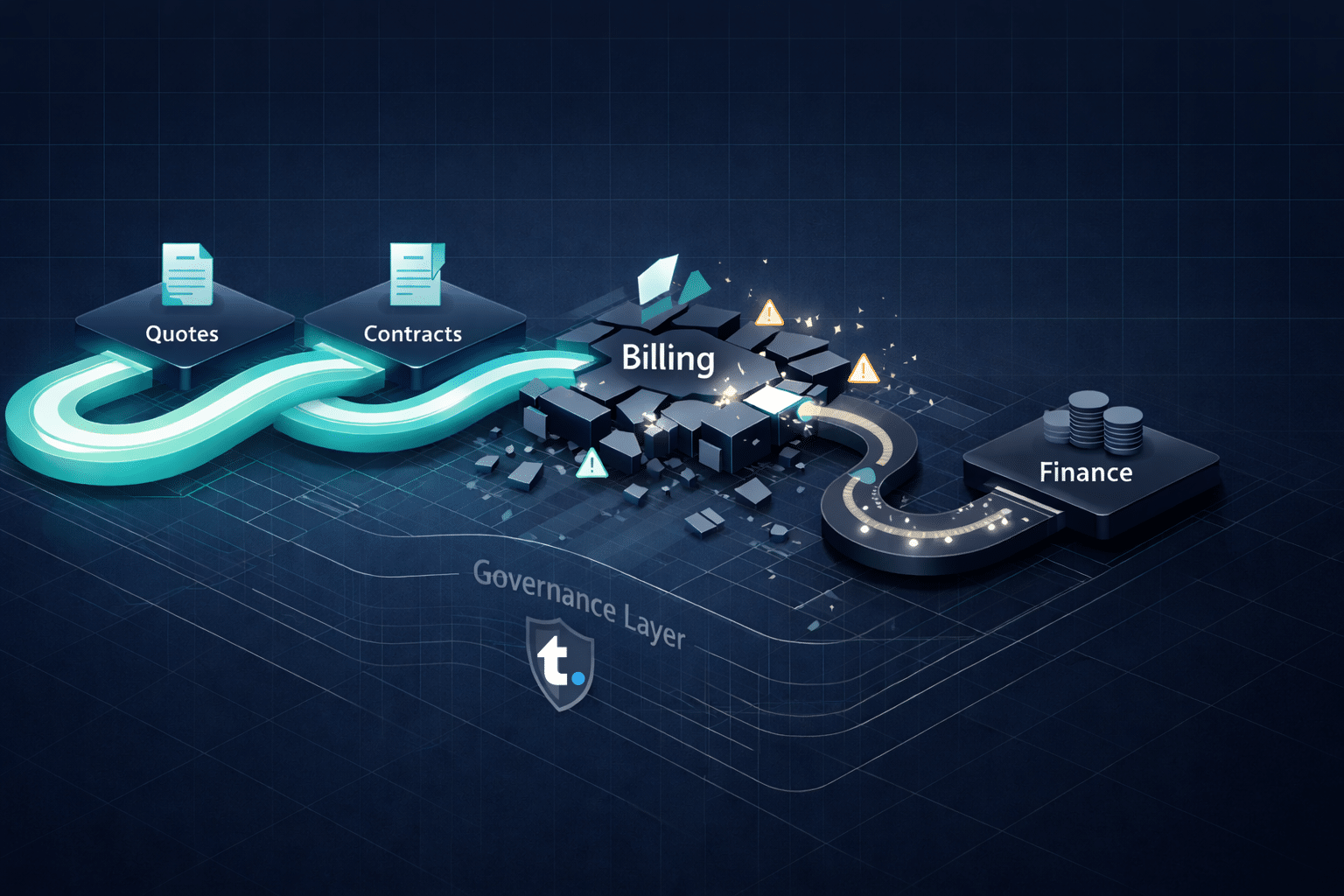
Most revenue programmes look successful at go-live.
In a billing revenue transformation, that confidence often holds — until billing starts.
Quotes are faster.
Sales adoption is high.
Dashboards look impressive.
However, billing starts.
Invoices don’t match expectations.
Credits pile up.
Disputes consume Finance and Sales alike.
And quietly, confidence in the entire transformation erodes.
What looked like progress begins to feel fragile. Not because the vision was wrong — but because the hardest part of revenue was deferred.
Why CFO Confidence Collapses at Billing
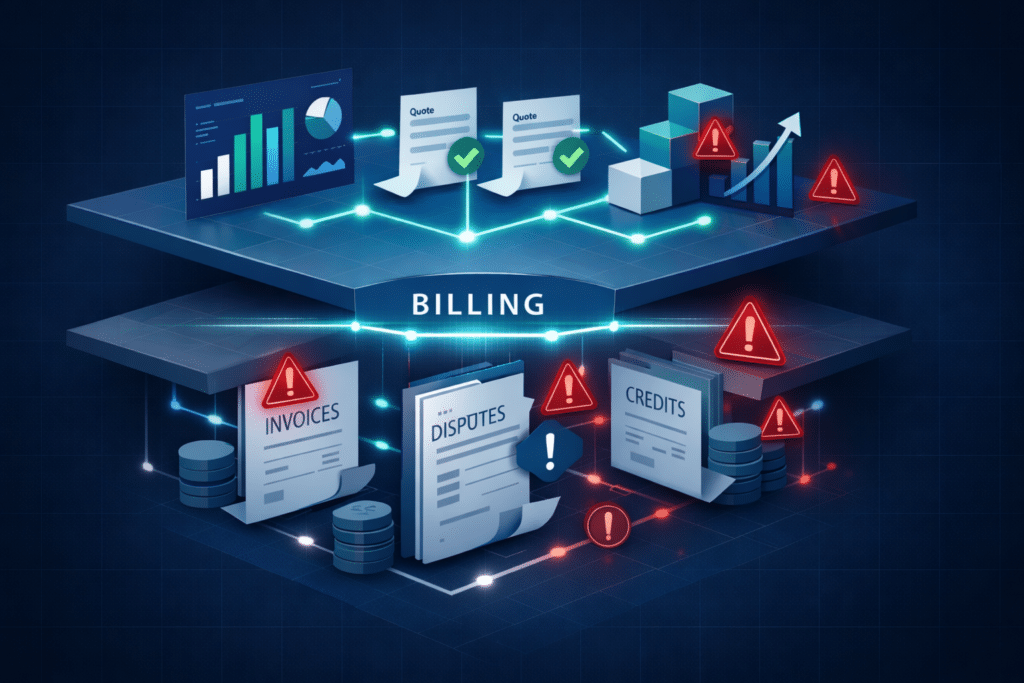
From a finance perspective, most revenue transformations don’t fail because automation was a bad idea — they fail because billing is where risk finally becomes visible.
Upstream, everything looks healthy:
- Forecasts assume best-case behaviour
- Automation accelerates pricing and approvals
- Dashboards signal progress and adoption
But once billing begins, Finance inherits decisions that are already locked:
- Pricing logic is fixed
- Discounting behaviour is entrenched
- Billing complexity is unavoidable
At that point, invoices stop matching expectations.
Credits accumulate.
Disputes multiply.
What looked like momentum upstream becomes exposure downstream.
CFO scepticism isn’t resistance to change.
It’s resistance to uncontrolled, unrecoverable risk.
Finance isn’t reacting to automation — it’s reacting to the moment when upstream decisions become financially irreversible.
This pattern is explored in more depth in our CFO’s Guide to Agentic Revenue, which looks at how governed autonomy prevents these downstream failures before they reach billing.
Why Billing Breaks Revenue Transformation
Billing rarely gets attention early because:
- It’s complex
- It’s cross-functional
- It doesn’t feel “strategic”
These factors push billing downstream in programme design — even though it’s the first place customers and cash feel the impact.
Yet billing is where revenue intent becomes customer reality.
Every discrepancy is visible.
Each error damages trust.
Over time, disputes delay cash.
If revenue is an operating system, billing is its moment of truth.
The Hidden Cost of Billing Failure
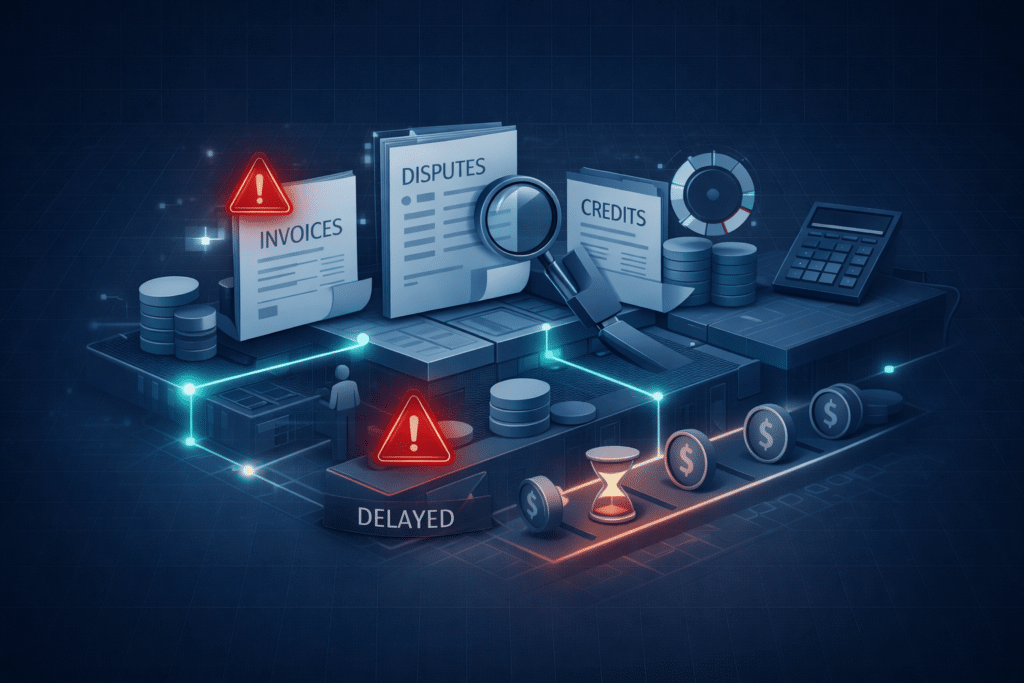
When billing isn’t deliberately designed into revenue transformation, the consequences cascade:
- Finance absorbs manual effort
- Sales firefights instead of selling
- Customers lose confidence
- Cash cycles lengthen
As a result, none of these show up clearly in the original business case.
All of them show up in month-end close.
Worse, teams often blame these failures on “process” or “training” — rather than the architectural gaps that created them.
Why Legacy Models Break Down
Traditional revenue models assume:
- Billing follows contracting cleanly
- Products behave predictably
- Usage changes are rare
In practice, those assumptions no longer hold.
Modern revenue violates all three.
Subscriptions upgrade mid-term.
Usage fluctuates daily.
Entitlements change continuously.
Without a system that deliberately orchestrates these changes, billing chaos isn’t an exception — it’s the default.
The Role of ARM in Billing Revenue Transformation
Agentforce Revenue Management doesn’t always replace billing systems.
It makes them reliable.
ARM creates a governed layer between commercial intent and financial execution by governing what can be sold, tracking changes to entitlements, coordinating amendments and renewals, and explaining billing outcomes transparently.
As a result, ARM reduces invoice errors, credit volumes, and dispute cycles — while improving customer trust, cash predictability, and finance credibility.
Billing stops being reactive — and becomes explainable.
That explainability is what allows Finance to trust automation at scale.
Billing Is a Design Problem, Not an Execution One
Most billing failures don’t originate in billing.
They originate in upstream decisions that were optimised for speed rather than control.
Common root causes include unclear pricing logic, inconsistent amendment handling, and missing policy enforcement.
By contrast, fixing billing downstream is expensive.
Designing revenue correctly upstream is not.
What Leaders Get Wrong
The most dangerous assumption in revenue programmes is simple:
“We’ll fix billing later.”
By that point, trust has already been lost.
Leaders must co-design billing with pricing, contracts, and agents — or billing will expose every shortcut taken upstream.
Executive Takeaway
You can automate quoting.
You can optimise contracts.
And you can deploy agents.
But if billing doesn’t work, none of it matters.
If billing feels fragile, it’s usually because revenue was designed for speed before it was designed for control.
The organisations that scale confidently treat billing as a design decision — not a downstream fix.
If this resonates and you’re reassessing how billing, pricing, contracts, and automation fit together, get in touch with the team at Trigg.

- Seller Management: The Growth Engine Behind Scalable Marketplaces - March 2, 2026
- ERP vs ARM: Who Should Control Revenue? - February 19, 2026
- Why Change Management Is the Hardest Part of Transformation - February 13, 2026