
Sales Automation Archives - Trigg Digital

Posts in Sales Automation

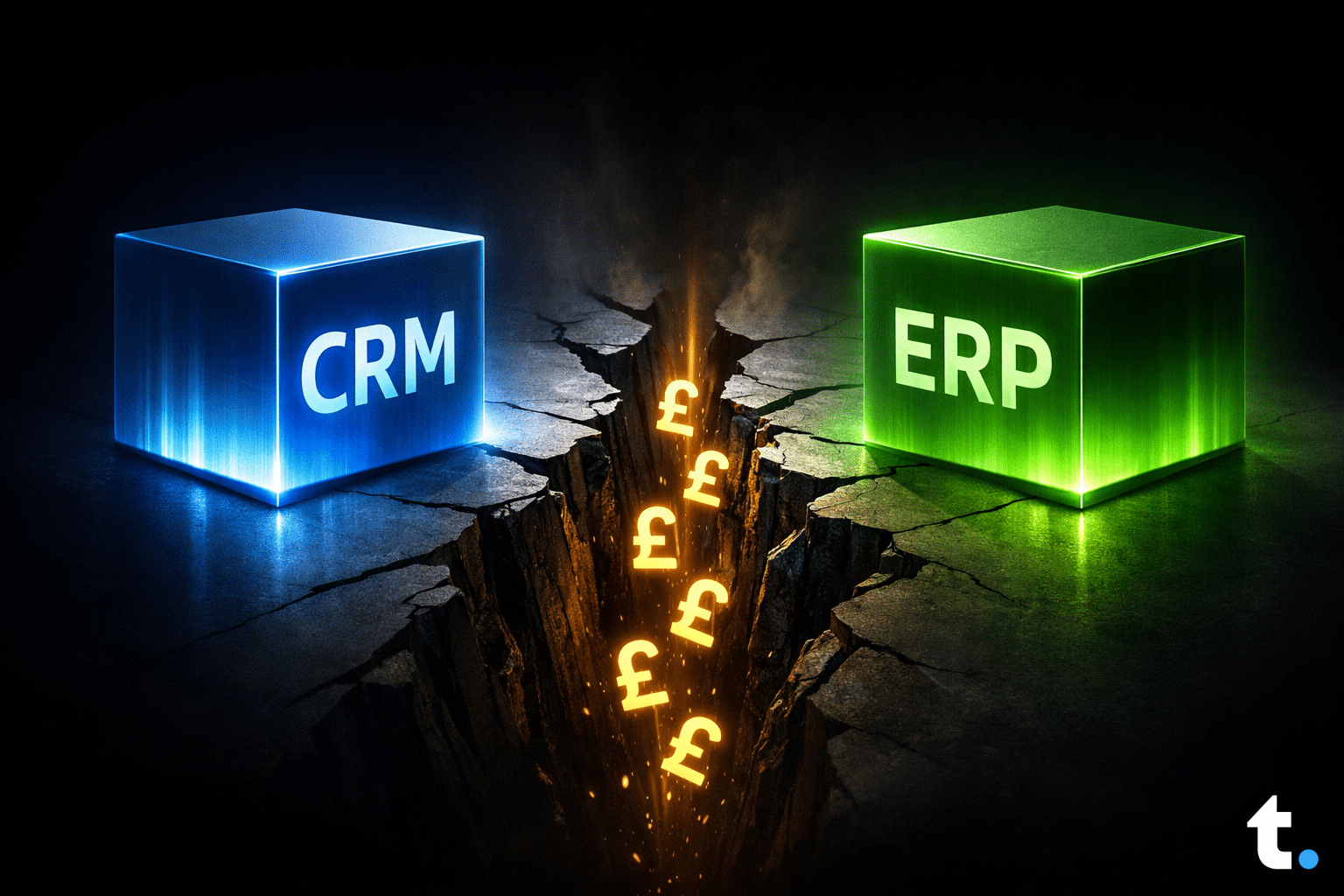
Agentforce Revenue Management: The Missing Control Plane Between CRM and ERP

January 19th, 2026 Posted by Insights, Sales, Sales Automation 0 thoughts on “Agentforce Revenue Management: The Missing Control Plane Between CRM and ERP”

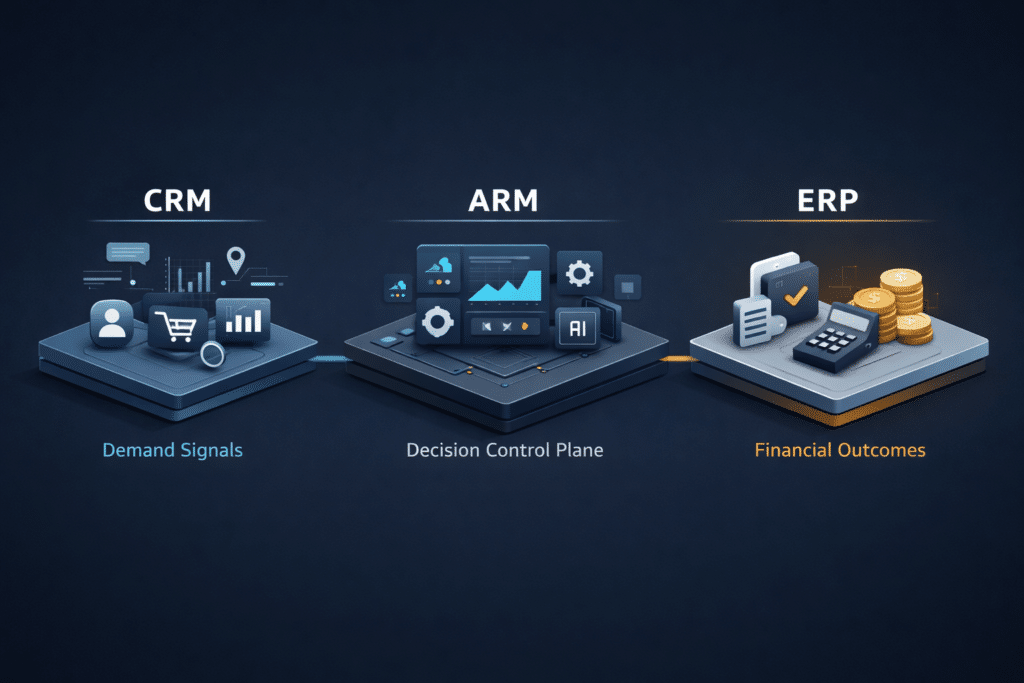
Agentforce Revenue Management (ARM) provides the revenue control plane enterprises need between CRM and ERP. Most enterprises already run two powerful systems:

CRM captures demand.
ERP records financial truth.

Yet revenue still leaks.

Deals stall.
Billing disputes rise.
Finance questions pipeline confidence.

The problem isn’t system capability.

Instead, neither platform was designed to orchestrate revenue end to end.

The False Choice: CRM or ERP Owning Revenue

When revenue breaks, organisations swing between two extremes. One camp argues that sales should own it and push everything into CRM. Meanwhile, the other insists finance should take control and lock everything down in ERP.

Both approaches fail — and they fail for the same reason.

No single function owns revenue. Instead, revenue operates as a cross-functional system built on three elements: intent, decisioning, and execution.

CRM captures what customers want. However, ERP records what actually happened.

As a result, organisations lack real-time control.

What’s missing is a revenue control plane — a layer that governs what can happen before execution begins.

The Messy Middle Between CRM and ERP

Between CRM and ERP sits the most fragile layer of revenue operations. Here, teams define pricing logic, govern discounts, manage contracts, handle renewals, apply usage changes, and hand off billing.

As a result, margin gets negotiated, risk increases, and exceptions multiply.

Historically, organisations stitched this layer together with CPQ rules, manual approvals, spreadsheets, and deal desks. At the time, this approach felt “good enough.”

However, it no longer scales.

Today, subscriptions, consumption pricing, global revenue models, and AI-driven decisions demand real-time control. Therefore, complexity has outgrown the tooling.

Why Revenue Needs a Control Plane

Modern enterprises don’t just need more automation. Instead, they need a revenue control plane.

This system coordinates decisions across Sales, Finance, Legal, and Operations. It enforces commercial policy dynamically and translates customer intent into execution.

This is exactly what Agentforce Revenue Management delivers.

ARM doesn’t replace CRM or ERP. Instead, it sits between them to orchestrate revenue with speed and governance.

As a result, leaders make the right decisions before execution — not after.

What Is Agentforce Revenue Management?

Agentforce Revenue Management (ARM) is Salesforce’s revenue orchestration layer. Its role is to own commercial intent, validate deals against policy and margin rules, and orchestrate execution into billing and finance systems.

ARM is not CPQ v2. It’s not a billing engine. And it’s not a reporting layer. It’s a control system.

In practice, CRM captures what the customer wants. ARM governs what the business allows. ERP records what gets booked and billed.

This structure removes friction, reduces risk, and dramatically improves forecast confidence.

Agentforce Revenue Management and AI Agents

As AI agents take on more responsibility — from creating quotes and managing renewals to resolving billing queries — the risk of unguided automation increases.

Without a revenue control plane, agents act on incomplete data, finance loses visibility, and trust starts to erode. Automation moves faster than governance, and that’s where things break.

Agentforce Revenue Management provides the guardrails that allow automation to scale safely. It ensures AI-driven actions are aligned with commercial policy, financial controls, and enterprise risk standards.

For a deeper view on modern revenue architecture, explore our guide to the Revenue Operating System.

Executive Takeaway

If revenue still feels unpredictable, slow, or contested internally, it’s rarely a people problem. It’s almost always an architecture problem.

Until organisations design a revenue control plane between CRM and ERP, they will continue to leak value through friction, exceptions, and manual workarounds.

The future of revenue isn’t owned by Sales or Finance.

It is orchestrated — deliberately — through Agentforce Revenue Management.

Ready to take control of revenue?
See how Agentforce Revenue Management delivers real-time governance across every deal, renewal, and billing event. Book a strategy session to see ARM in action.

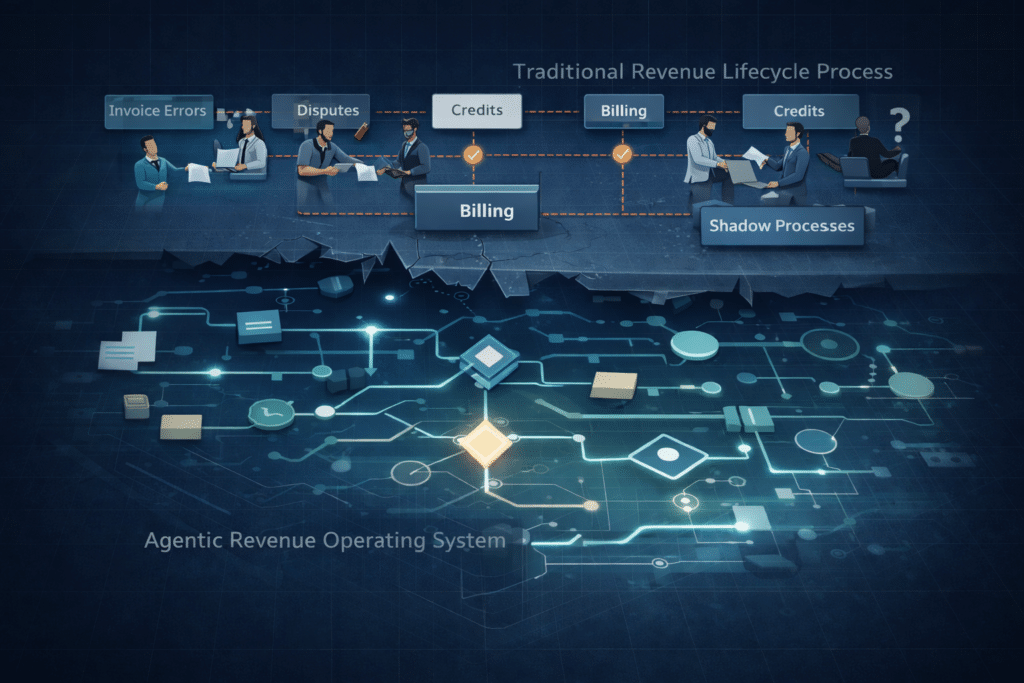
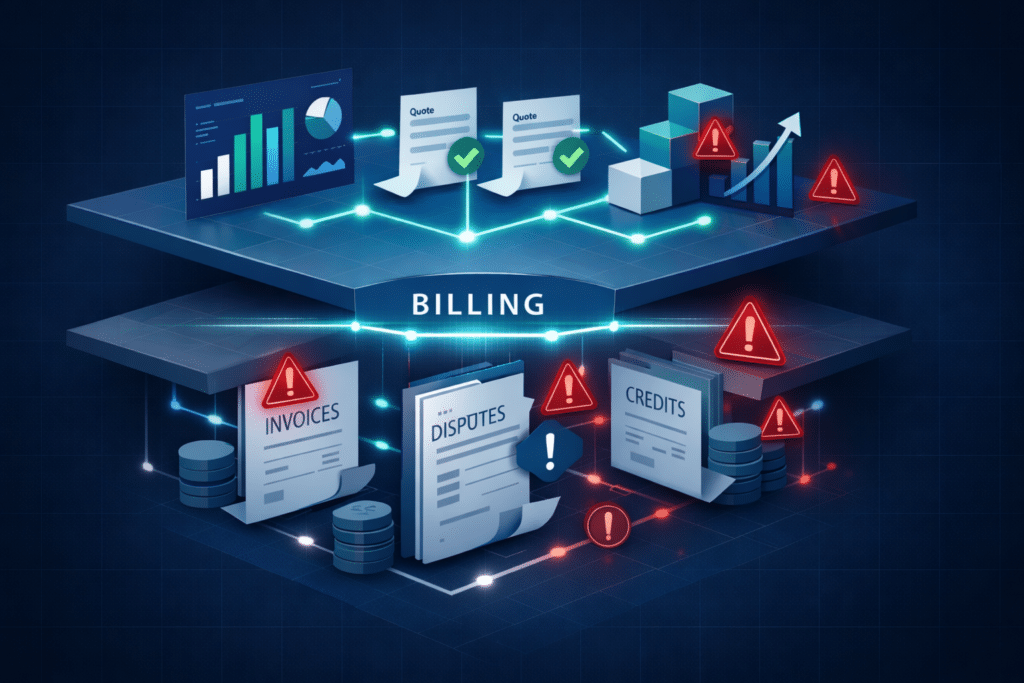
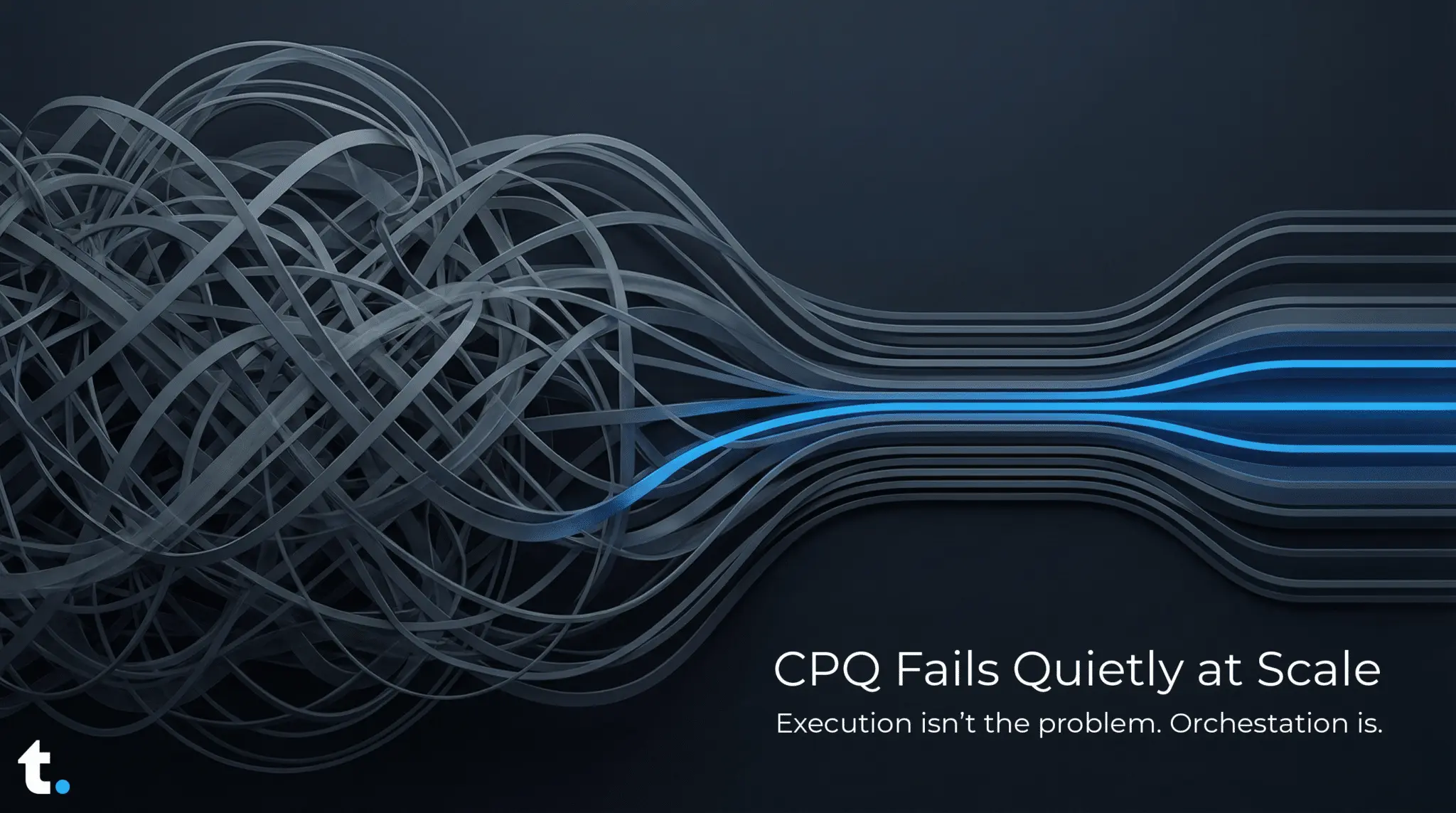
Abstract enterprise system visual showing tangled, layered flows on the left gradually resolving into clean, parallel lines on the right, symbolising the shift from CPQ complexity to governed orchestration and decision clarity.

Why Most CPQ Programmes Fail at Scale (And What Replaces Them)

January 12th, 2026 Posted by Insights, Sales, Sales Automation 0 thoughts on “Why Most CPQ Programmes Fail at Scale (And What Replaces Them)”

CPQ at scale rarely fails dramatically.
It doesn’t crash.
Nor does it get ripped out overnight.
And it rarely triggers a transformation programme on day one.

Instead, it degrades.

Quietly.

Not because CPQ is outdated — but because revenue has outgrown it.

As product portfolios expand, pricing models multiply, and revenue becomes more dynamic, CPQ shifts from enabler to constraint — not because the technology is poor, but because the role it’s been asked to play has fundamentally changed.

The Warning Signs Are Subtle — Until They Aren’t

In practice, most organisations don’t wake up one morning and declare their CPQ broken. Instead, the signals emerge slowly:

🧾 Quotes still go out — but take longer than they used to
🧩 Exceptions increase — and quietly become “normal”
🔍 Finance validates after close — not before
🧑‍💼 Deal desks grow — instead of shrinking
📉 Margin erosion appears later — not in the moment

Individually, these look like operational issues.

Collectively, they signal something structural — revenue decisions are being forced through a system designed for a simpler world.

These are the early indicators of CPQ being stretched beyond its design limits.

What CPQ Was Actually Built to Do

Originally, CPQ was designed to answer a narrow set of questions:

Is this configuration valid?
Does the price follow the rules?
Can sales generate a quote quickly and consistently?

That worked when:

📦 Products were largely static
📊 Pricing models were predictable
🧭 Sales owned most decisions
🧾 Billing followed contracting with minimal deviation

In that environment, CPQ automated execution effectively.

But modern revenue no longer fits inside those assumptions.

Today’s reality includes subscriptions, usage, amendments, renewals, mid-term changes, regional overlays, and continuous optimisation — all happening simultaneously.

CPQ was never designed to orchestrate that level of dynamism.

Where Scale Turns CPQ Into a Bottleneck

As complexity rises, the same failure modes appear across industries when CPQ at scale becomes the de facto decision engine.

Logic becomes fragile
Pricing rules pile up. Bundles nest inside bundles. Small changes carry unexpected consequences.

Trust erodes
Sales, finance, and billing interpret the same deal differently — and stop relying on a single source of truth.

Speed declines
Approvals multiply. Manual intervention increases. Automation paradoxically slows things down.

AI adds risk instead of leverage
When AI is bolted onto an unstable decision model, confidence drops instead of rising. Governance becomes reactive.

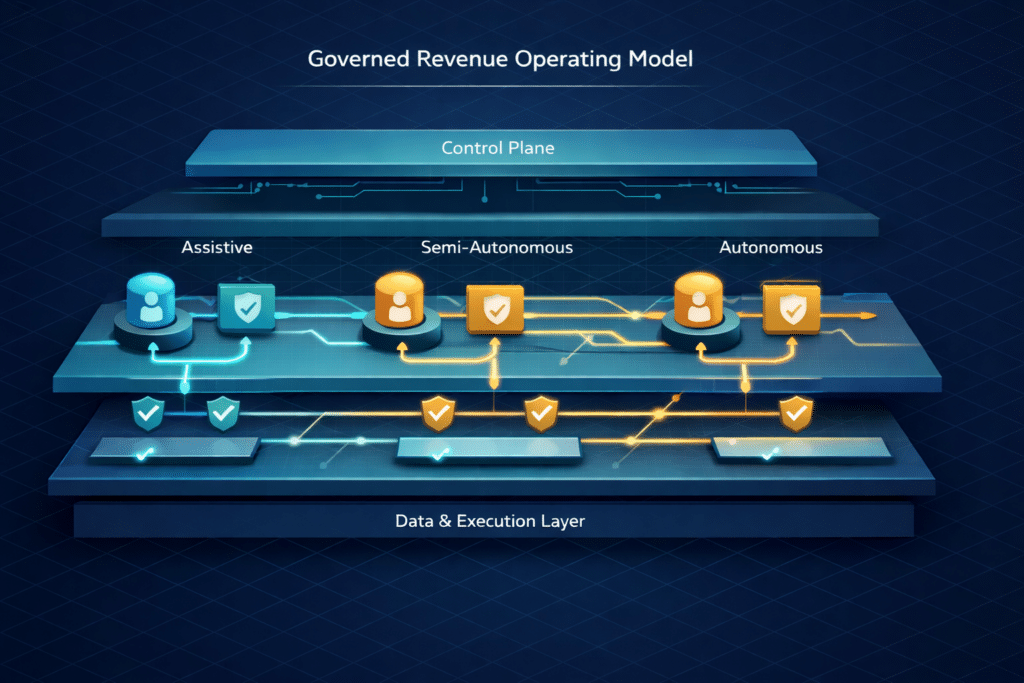
The shift requires agent-based execution that operates inside clearly defined policy, pricing, and risk boundaries — not alongside them.

Real value only emerges when agents operate inside defined policy, pricing, and risk boundaries — not alongside them.

None of this is a tooling problem.

It’s an operating-model problem.

The Real Shift: CPQ as a Component, Not the Brain

High-performing organisations aren’t “replacing CPQ”.

They’re demoting it.

They recognise that CPQ can’t sit at the centre of revenue decision-making. Instead, it needs to operate inside a broader revenue orchestration layer — one that:

🎛️ Governs pricing and policy centrally
🔄 Aligns sales intent with financial outcomes continuously
🤝 Defines where humans decide and where agents act
⚠️ Exposes risk before revenue is committed

In this model, CPQ executes — but it doesn’t decide.

Why This Isn’t Just Another CPQ Upgrade Cycle

Crucially, this isn’t CPQ v2.
It isn’t “CPQ plus AI”.
And it isn’t a better approval workflow.

It’s a recognition that revenue no longer behaves like a linear transaction flow.

It behaves like a system — adaptive, always on, and constantly recalculating.

Trying to manage that with tools designed for sequential handoffs guarantees friction, delay, and leakage.

What Leaders Need to Confront

Most CPQ programmes don’t fail at launch.

They fail over time — as complexity accumulates and confidence drains away.

The organisations pulling ahead are the ones willing to:

🚫 Stop treating revenue as a sales automation problem
🧠 Design decision-making, not just execution
🏛️ Embed finance, governance, and AI by design
🧩 Rethink the layer between CRM and ERP — where orchestration platforms like Agentforce Revenue Management increasingly sit — but where operating-model clarity is still missing

This is where we see transformation succeed — or stall.

Because revenue transformation is no longer a sales initiative.

It’s an enterprise design challenge.

Closing Thought

CPQ at scale still matters. But it can no longer be the place where revenue decisions live.

The future belongs to organisations that design for complexity first — and let CPQ play the role it was always meant to play:

Execution, not orchestration.
Control, not complexity.

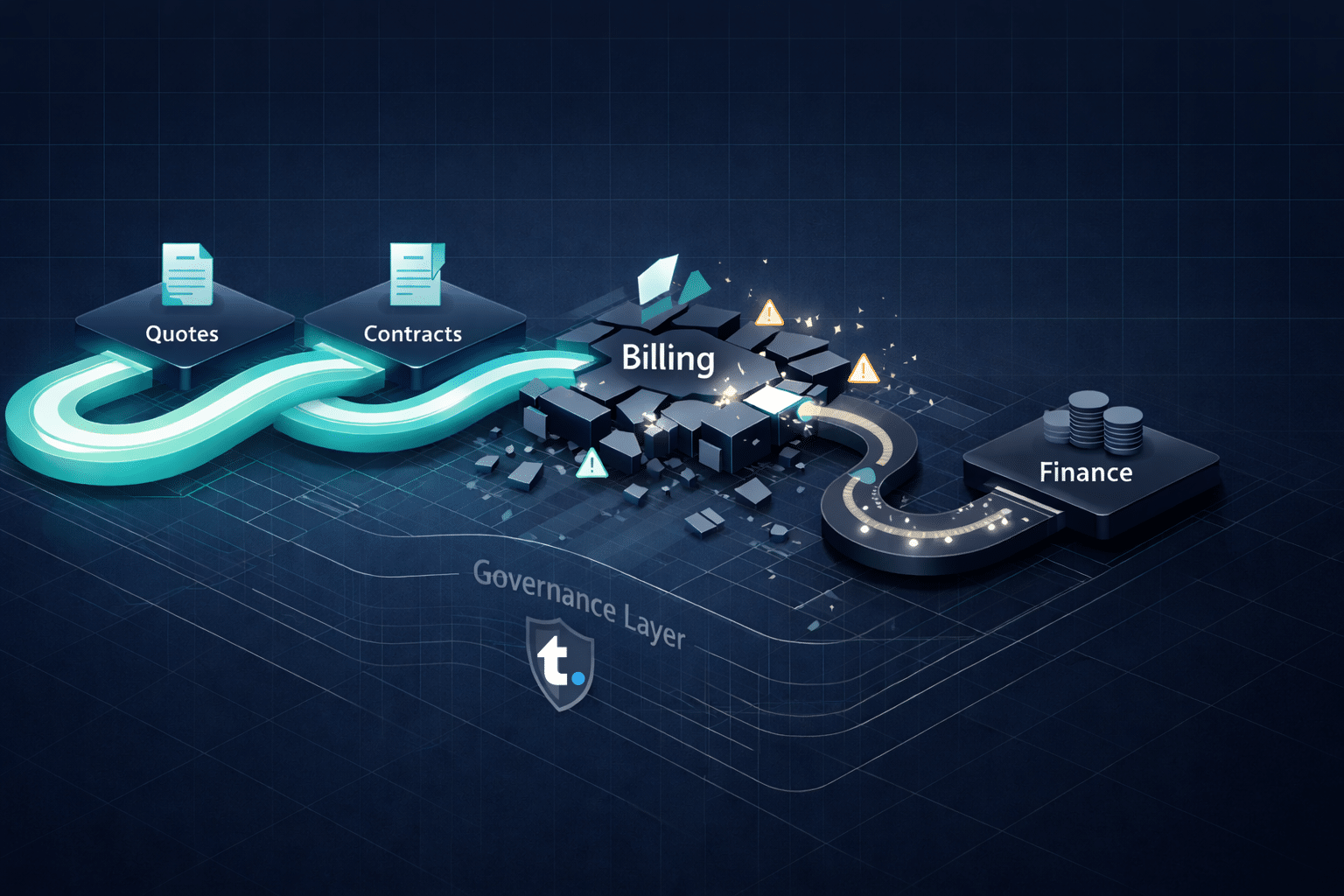
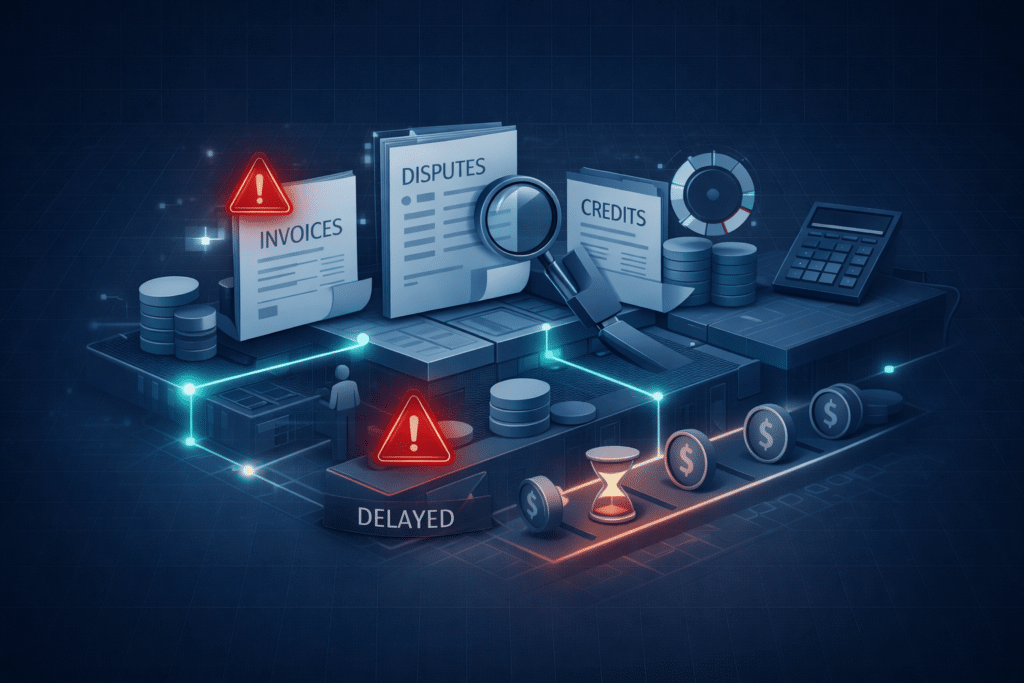
Abstract visual showing converging signals forming a stabilised horizontal control plane, representing non-linear revenue flows.

Revenue Is No Longer a Process — It’s an Operating System

January 7th, 2026 Posted by Insights, Sales, Sales Automation 0 thoughts on “Revenue Is No Longer a Process — It’s an Operating System”

For decades, enterprises treated revenue as a process.

Lead to opportunity. Quote to contract. Order to invoice.

Linear, sequential, and comfortably predictable.

That mental model is now breaking down — because revenue no longer behaves like a workflow you move through once. It behaves like an operating system: always on, continuously recalculating, and governing decisions in real time.

Today’s revenue environment is shaped by subscription and usage-based models, sprawling product portfolios, multiple regions and channels, and an ever-tightening web of finance, compliance, and margin constraints. At the same time, automation and Agentic AI are no longer optional — they are actively shaping how commercial decisions are made.

Trying to force this reality through yesterday’s Quote-to-Cash logic is like running cloud workloads on a mainframe. It technically works — until it doesn’t.

And when it breaks, it breaks expensively.

The Real Problem Isn’t Sales or Finance

It’s the Messy Middle

When revenue leaders describe where things go wrong, the symptoms are remarkably consistent.

Quotes take too long to produce. Approvals stack up. Renewals fail to capture full value. Billing disputes erode customer trust. Finance teams hesitate to rely on the numbers until weeks after the deal is done.

What’s striking is that none of this friction truly lives in CRM or ERP.

It lives in the space between them.

That “messy middle” — pricing logic, discounting rules, contract structures, amendments, order changes, billing hand-offs — is where an estimated three to seven percent of revenue quietly leaks away.

It’s where deal velocity slows, margins drift off policy, and governance becomes reactive rather than intentional.

Traditional CPQ tools were built to configure products and generate quotes. They were never designed to orchestrate revenue at enterprise scale, across constantly shifting commercial conditions.

Why Linear Quote-to-Cash Has Reached Its Limit

The original Quote-to-Cash model was designed for a very different world.

It assumed humans made most decisions, products rarely changed, pricing was largely predictable, and billing happened after the “real work” of selling was done.

None of those assumptions hold today.

Modern revenue demands continuous recalculation, live validation, dynamic pricing and packaging, and constant alignment between sales intent and financial reality. Revenue no longer behaves like a checklist you complete once — it behaves like a living system that is always in motion.

Linear Quote-to-Cash models struggle not because they are poorly implemented, but because they were never designed to operate as a governed revenue operating system under constant change.

When organisations try to force complexity through a linear flow, it doesn’t disappear. It simply re-emerges later as risk, rework, and revenue leakage.

Revenue as an Operating System: Why the Revenue Operating System Matters

The organisations pulling ahead are not just optimising individual steps in the process. They are redesigning how revenue itself operates.

They are building a revenue operating system — one designed to govern decisions, not just execute transactions.

Not a single tool, but a governing layer that determines:

  • how commercial decisions are made
  • who makes them (human or agent)
  • when decisions escalate
  • how intent moves cleanly into financial execution


In this model:

  • CRM captures demand
  • ERP records financial truth
  • the revenue layer in between coordinates pricing, policy, governance, and execution — live


This is where agent-based systems become genuinely transformational. Not because they automate isolated tasks, but because they manage complexity at speed, with governance designed in rather than bolted on.

It’s why many enterprises are now re-examining their revenue architecture — shifting focus away from individual tools and toward the operating layer that connects them.

This architectural approach increasingly aligns with how modern platforms describe enterprise revenue management: as a governed, real-time layer sitting between CRM and ERP.

What This Means for Leaders

If revenue is now an operating system, then CPQ on its own is no longer enough.

AI added after the fact introduces risk rather than control. Finance, billing, and governance can no longer sit downstream — they must be part of the design from day one.

Most importantly, revenue transformation is no longer a sales initiative.

It is an enterprise design challenge.

One that sits at the intersection of commercial strategy, financial governance, data, and automation — and one many organisations are only just beginning to confront.

Closing Thought

The next generation of market leaders won’t win because they quote faster.

They’ll win because they run revenue as a real-time, governed operating system — designed for complexity, resilience, and scale, rather than nostalgia.

Gumtree Accelerates Digital Transformation with Trigg Digital to Unlock Efficiency and Growth

August 4th, 2025 Posted by AI, Automation, Marketing Automation, News, Retail, Retail Media, Sales Automation, Service Automation 0 thoughts on “Gumtree Accelerates Digital Transformation with Trigg Digital to Unlock Efficiency and Growth”

Gumtree, one of the UK’s most popular online marketplaces, has appointed Trigg Digital as its Strategic Salesforce Partner to implement a modular, future-ready CRM platform to fuel its next phase of growth.

As Gumtree sharpens its focus on product innovation, operational excellence, and delivering brilliant experiences for users, the business is investing in a scalable platform that brings together all core business functions across a diverse portfolio – from services and property, to jobs, media sales and ops, finance, and customer support – into a single, connected Customer 360 view.

Gumtree selected Trigg Digital for its proven expertise in complex, multi-vertical marketplace environments. The new CRM solution will deliver a flexible, composable architecture that accelerates time-to-market for new product offerings and ensures a consistent, data-driven experience across every customer touchpoint.

It also lays the foundations for Agentforce – Salesforce’s AI-powered automation and insights engine – designed to boost productivity, reduce operational costs, and enable smarter, faster cross-selling, upselling, enhanced customer satisfaction, and more informed decision-making.

This partnership represents a pivotal step in Gumtree’s mission to build a more responsive, intelligent, and sustainable marketplace – delivering greater value to its millions of users as the business enters an exciting new chapter.

Andy Harper, Chief Operating Officer at Gumtree, shared: “Partnering with Trigg Digital is a significant milestone in Gumtree’s transformation journey. Their deep understanding of complex marketplace environments and proven Salesforce expertise made them the clear choice. This new platform will give us the agility to innovate faster, streamline our operations, and deliver a more connected, personalised experience for our customers across every touchpoint.

Euan Begley, Head of Strategy & Business Ops at Gumtree, added: Our collaboration with Trigg Digital is central to enabling a more agile, data-driven Gumtree. The new CRM platform will streamline how we work across teams, reduce complexity, and give us the strategic flexibility to respond faster to market opportunities – all while keeping the customer experience at the heart of what we do.

Steven Paul

Steven Paul, Chief Executive Officer at Trigg Digital, added: “Partnering with Gumtree is a particularly meaningful milestone for me personally. Having spent a large part of my career working in marketplaces, this feels like a full-circle moment. Gumtree is an iconic brand with a clear vision for the future, and we’re excited to bring our deep Salesforce expertise to support their transformation. Together, we’re building a platform that empowers innovation, drives operational excellence, and puts the customer experience front and centre.

About Gumtree

Gumtree is one of the UK’s most popular online marketplaces, offering users a simple and effective way to buy, sell, and connect within their local communities. Founded in 2000, Gumtree has become a trusted brand with millions of users across the UK, championing re-commerce and supporting local trading. With more than 1.8 million live ads at any one time, it’s not surprising that more than 10 million people visit the site every month to find what they need locally, affordably, and sustainably. Visit www.gumtree.com  and follow @GumtreeUK (Instagram) and @Gumtree (Twitter) to join the conversation.

About Trigg Digital

Trigg Digital is a leading strategic Data, CRM and AI consultancy, leveraging in-house expertise, industry know-how and best-in-class Salesforce capabilities to help clients go further, faster, across the UK, Europe, Canada, USA and APAC. For more information on Trigg head over to www.triggdigital.com.

ASOS Media Group and Trigg Digital strategic Salesforce partnership

ASOS Media Group Taps Trigg Digital as a Strategic Salesforce Partner

April 22nd, 2025 Posted by AI, Automation, Marketing Automation, News, Retail, Retail Media, Sales Automation, Service Automation 0 thoughts on “ASOS Media Group Taps Trigg Digital as a Strategic Salesforce Partner”

We’re very excited to announce that ASOS, the go-to destination for fashion-loving 20-somethings, has established a strategic partnership with Trigg Digital, a global Salesforce AI CRM consultancy with a fast-growing portfolio spanning UK, Europe, Canada, USA and APAC. The partnership will see the launch of a unified next-gen retail media platform to scale its media network powered by Salesforce, AI and Agentforce.

Harnessing ASOS Media Group’s (AMG) growth plans and Trigg’s cutting-edge Data, CRM, AI, and Retail Media expertise, together, we will power deeper insights, enhance operational efficiency, improve campaign performance and measurement, maximise data-driven monetisation and deliver best in class experiences for consumers, advertisers, brand partners and employees.


Elton Ollerhead, Director of ASOS Media Group, shared: “Our partnership with Trigg Digital marks another step forward for ASOS Media Group, helping us to create a better experience for our brand partners and our customers.”

Steven Paul, CEO, Trigg Digital, added: “We’re thrilled to collaborate with ASOS and the AMG team on this transformative journey to elevate ASOS’s retail media eco-system with Salesforce, AI and Agentforce at the core.”

Steven Paul

About ASOS

Founded in 2000, ASOS has 20m active customers in over 200 markets. We bring fashion lovers around the world the best and most relevant fashion through our unique own brands including ASOS DESIGN, ARRANGE, COLLUSION, Topshop, and Topman, styled with the most exciting products from local and global partner brands. With our expert in-house design team and agile and flexible commercial model, including ASOS Fulfilment Services, Partner Fulfils, and Test & React, we make the latest trends accessible to all and give customers the confidence to be whoever they want to be.

About ASOS Media Group

ASOS Media Group (AMG) is ASOS’s Retail Media Network. AMG connects partner brands with millions of ASOS’s customers through tailored advertising, innovative content partnerships, and data-driven campaigns. Using inhouse creative in ASOS’s tone of voice, and by harnessing ASOS’s deep understanding of consumer behaviour and trends, AMG helps brands build authentic connections and drive meaningful engagement with one of the world’s most influential demographics.

About Trigg Digital

Trigg Digital is a leading strategic Data, CRM and AI consultancy, leveraging in-house expertise, industry know-how and best-in-class Salesforce capabilities to help clients go further, faster, across the UK, Europe, Canada, USA and APAC.

About mediaNXT by Trigg

mediaNXT is Trigg Digital’s specialist retail media practice as this high margin capability is rapidly expanding across all sectors, as seen in Retail Media, Travel Media, Finance Media, Sports Media and more. We obsess about simplifying complex ad sales, ad operations and campaign management processes and technology. We power new monetisation opportunities, scalability, and high-margin growth – enhancing consumer, client and employee experiences, driving smarter decisions, and delivering measurable outcomes to ensure our clients stay ahead in a rapidly evolving market.

For more information on Trigg’s Retail Media Solutions head over to www.medianxt.ai

Trigg Retail Media Reporting Agent

Simplify and Automate Campaign Reporting with the Retail Media Reporting Agent

January 14th, 2025 Posted by Agentforce, Insights, Media, Retail, Retail Media, Sales, Sales Automation 0 thoughts on “Simplify and Automate Campaign Reporting with the Retail Media Reporting Agent”

We’re at it again – new week, new Retail Media game-changer! magic wand

Say hello to the Trigg Retail Media Reporting Agent, your new best friend for simplifying campaign reporting. With just one click, you can whip up monthly and daily campaign reports ready to share with your brand, advertiser, or agency partners!

📊 Instant Reports: Generate visual XLS, PDF, or PPT campaign reports faster
Set It & Forget It: Schedule reports to go out daily, weekly, or monthly
✔️ Spot-On Accuracy: Wave goodbye to tedious admin and manual errors
📅 All the Metrics: Impressions, CTR, Viewability, Pacing and more – served up fresh
🤝 Collaboration, Simplified: Share insights seamlessly in one-click

Work smarter, not harder – and make reporting fun (yes, fun!), thanks to our friends at Salesforce and Documill.

Ready to see the magic? Let’s go! ✨

Trigg Retail Media Performance Agent

Empower Sales and Ad Ops teams with the Retail Media Performance Agent

January 9th, 2025 Posted by Agentforce, AI, Data, Retail, Retail Media, Sales, Sales Automation, Service Automation, Transport, Travel and Hospitality 0 thoughts on “Empower Sales and Ad Ops teams with the Retail Media Performance Agent”

In today’s fast-paced Retail Media landscape, delivering a successful omni-channel campaign requires more than just effort, it demands strategic collaboration, precise real-time performance monitoring, and agile optimization to maximise return on ad spend.

Meet the Trigg Retail Media Performance Agent – crafted to empower sales and ad ops teams with unparalleled control over their campaigns:

Campaign Summaries: Real-time actionable insights to address pacing and performance issues instantly

🎯 Transparency: Keep teams aligned, informed, and empowered with timely updates that drive smarter decisions

⏱️ Save Time: Automate reporting and alerts to focus on high-value strategic initiatives

🔄 Stronger Collaboration: Accelerate response times and engagement via #Slack, MS Teams, email, or self-serve

Say goodbye to manual reporting, misaligned teams, and juggling multiple tools. Take the leap to smarter, faster, and more effective campaign management. Discover the difference today!

Agents vs Traditional Chatbots with Mark Hartnady

Agents vs Traditional Chatbots : The Great Christmas Debate 🎅🎄

December 23rd, 2024 Posted by Agentforce, AI, Data, Retail, Retail Media, Sales, Sales Automation, Service Automation, Transport, Travel and Hospitality 0 thoughts on “Agents vs Traditional Chatbots : The Great Christmas Debate 🎅🎄”

Customer expectations are skyrocketing, and businesses are rethinking their approach. This holiday season, the debate is on: Will traditional chatbots keep up, or is Salesforce Agentforce taking the lead?

🤔 Key Differences:

🤖 Chatbots: Depend on intent models, needing exhaustive training for specific queries.
🧠 Agentforce: Powered by AI with Atlas and RAG, handles broader, dynamic instructions with ease.

✨ Why Agents Outpace Chatbots:

Faster Setup: No complex training required—just general instructions.
🔍 Unstructured Data: Seamlessly processes FAQs, support docs, and more using RAG.
🌍 Omnichannel Reach: Web today, voice and email tomorrow, delivering consistency everywhere.

🎁 Delivering Value:
Agents outperform bots, achieving 40-50% better results by resolving complex queries faster, improving ROI, and elevating customer satisfaction.

🎅 Future Outlook:
Industries like retail, finance, and healthcare are already showing where Agentforce will dominate, thanks to its scalability and adaptability.

As we toast this season, one thing is clear – Agentforce is the future. Find out why below;

Revolutionise Customer and Employee Experience’s with Agentforce! 🚀

December 17th, 2024 Posted by Agentforce, AI, Data, Retail, Retail Media, Sales, Sales Automation, Service Automation, Transport, Travel and Hospitality 0 thoughts on “Revolutionise Customer and Employee Experience’s with Agentforce! 🚀”

We were thrilled to meet with Steve Dennahy from Salesforce to explore Salesforce Agentforce and its transformative real-world applications. Alongside our Trigg team—Mark Hartnady, Steve Paul and Tommy Wong, Steve shared insights into how businesses can enhance customer experiences, reduce Sales and Service operational costs, and empower agents using Agentforce, a powerful customer-facing co-pilot.

What is Agentforce?
Steve Dennahy provides insights into real world examples on how Agentforce supports processes across Sales, Service through multiple channels automating repetitive tasks across digital channels like web chat, WhatsApp, and social media—24/7. 

🛠️Real-World Impact
Hear more on some of the seamless exchanges in retail, instant warranty information in automotive, proactive patient support in healthcare, and simplified bookings in travel and logistics.

💡 What’s the Value?
Did you know the cost of an Agentforce conversation is as little as £1.60? That’s a fraction of phone or email interactions, driving significant cost savings while improving customer satisfaction

#Agentforce #AgentReadiness #AgentEvaluate #AgentActivate #ROI #Salesforce #SalesforcePartner #salesforce #sales #service #marketing #assistiveagents #automonomusagents #customersatisfaction #employeeexperience

How Data, AI and AI Agents Are Transforming industries

December 17th, 2024 Posted by Adoption, Agentforce, AI, Data, Events, Media, Retail, Retail Media, Sales, Sales Automation, Service Automation, Transport, Travel and Hospitality 0 thoughts on “How Data, AI and AI Agents Are Transforming industries”

On 8th October 2024, Trigg hosted an exclusive event at The Marriott, Canary Wharf, in collaboration with Salesforce and top industry innovators, following the exciting Agentforce World Tour launch in London. Leaders shared how UK businesses are leveraging AI to deepen customer connections, drive growth, and redefine customer loyalty.  Keep reading for top insights from the evening!

Our panellists, Mark Graham – Maersk, Sophia Farrag – IAG Cargo, Kate Donaghy – Secret Escapes, and Chris Pannell – Salesforce, shared insights on using AI and data to predict customer behaviour, enhance personalisation, and optimise loyalty programs, ultimately transforming both the customer and employee experience. During the discussion:

Mark Graham highlighted the challenges associated with managing data effectively and the key steps needed to streamline processes for greater efficiency and automation. He emphasised the importance of identifying the right starting points to achieve ROI, focusing on improving customer service, driving user adoption, and supporting sustainable growth.

Sophia Farrag addressed key data challenges, stressing the need for a robust data plan. She highlighted the importance of cleansing and preparing data for predictive AI to learn and provide accuracy supporting strategies such as next-best-action and integrating new technologies to improve business outcomes. Sophia also pointed out the varying levels of AI maturity within organisations, noting that many are still grappling with how to connect AI capabilities to practical applications.

Kate Donaghy shared Secret Escapes’ experience as an early adopter of Salesforce Einstein AI. She highlighted how predictive AI improved case resolution and customer insights, achieving a 25% efficiency gain. Kate emphasised the value of a refined knowledge base, with a successful 18-month review of Einstein bots supporting strong agent performance and member engagement. She praised Agentforce for its accuracy and brand alignment, stressing the importance of scoping topics, enhancing AI learning, and using guardrails to ensure consistent, efficient responses.

Chris Pannell from Salesforce discussed how public sector organisations can leverage predictive AI to transform services and decision-making. With the exponential growth of data, predictive AI can forecast trends, improve service delivery, and boost operational efficiency. He also highlighted Salesforce’s Data Cloud, providing secure, onshore data hosting for public sector bodies, as a critical enabler for AI adoption, supporting the UK’s push toward more data-driven, AI-powered public services.

Our panel concluded with an inspiring look into the future as each speaker shared predictions on emerging technologies and AI’s role in shaping their industries over the next 3-5 years. Their insights provided a roadmap for what’s next—and how businesses can prepare. A huge thank you to them for their valuable insights!

Special thanks to our partners Rebecca Dimmock (Natterbox), Celine Normann-Dyer (Forter), Lee Heather, and Jessica Murray (Salesforce) for co-hosting and making this event a success.

If you’d like to explore how AI and Agentforce can streamline your customer service, reach out to us to learn more.

+44 203 239 8492

hello@triggdigital.com 

Make sure you don’t miss out on all the fun at our next Trigg event!