Why Change Management Is the Hardest Part of Transformation
February 13th, 2026 Posted by Steve Paul AI, Insights, Revenue Management, Sales, Sales Automation 0 thoughts on “Why Change Management Is the Hardest Part of Transformation”Most revenue transformations don’t fail in technology.
They fail in behaviour.
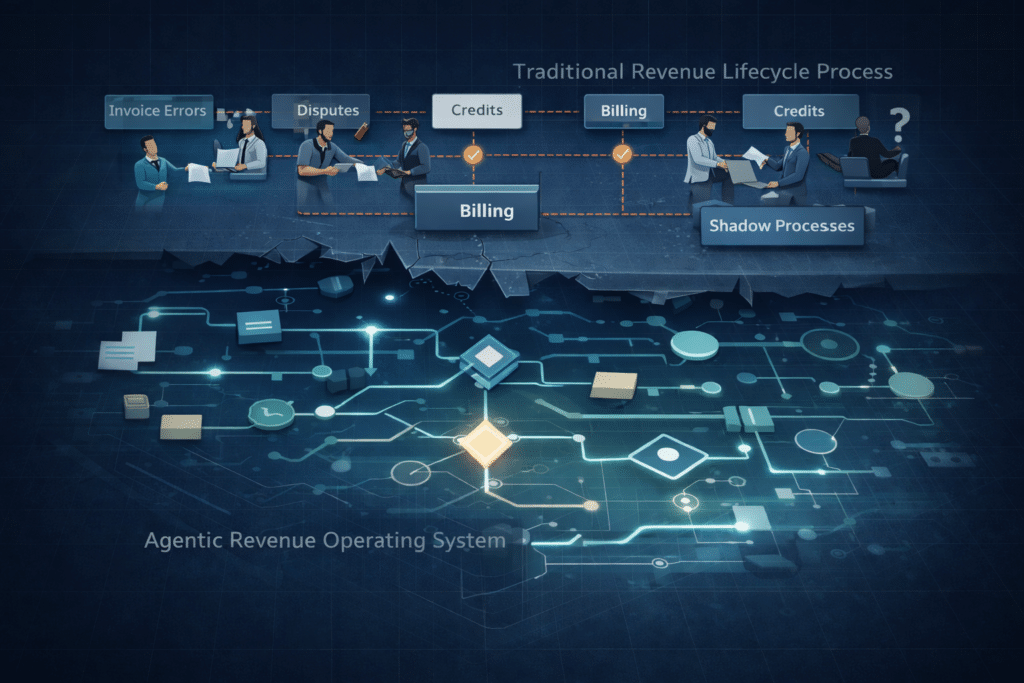
New platforms go live. Automation works. Dashboards light up. Yet months later, the same patterns reappear: sales teams bypass the system, deal desks quietly return, finance runs shadow controls, and AI agents are switched off or ignored.
This isn’t resistance.
It’s what happens when organisations fail to design change properly.
At Trigg, we see revenue transformation fail not because the platform is wrong — but because decision ownership, autonomy, and governance are never designed together.
Software executes decisions. Behaviour determines whether those decisions stick.
Transformation Fails in Behaviour, Not Software
Modern transformation programmes are very good at shipping systems.
They are far less effective at reshaping behaviour.
Dashboards lighting up does not mean teams have changed how they make decisions.
Automation running does not mean teams trust the system.
AI can make recommendations, but people won’t follow them without trust.
What breaks isn’t the tooling — it’s the gap between how decisions are supposed to be made and how people actually make them under pressure.
That gap is a change-management problem.

Revenue Transformation Changes Decision-Making
Agentic revenue models don’t just improve efficiency. They change who decides.
Who can approve pricing.
When exceptions are allowed.
How renewals are triggered.
Which actions happen without human involvement.
That’s not just a system change — it reshapes the organisation.
When leaders don’t make decision boundaries explicit, teams default to familiar behaviours. Not out of defiance, but because ambiguity feels risky in revenue-critical moments.
Why Traditional Change Management Breaks Down
Most change programmes assume roles stay broadly the same, systems support people, and governance remains static.
Agentic revenue breaks all three assumptions.
Agents recommend, initiate, and enforce actions automatically. Without deliberate design, teams experience this shift as a loss of control rather than progress. People push back quietly by creating workarounds instead of confronting the change.
This is why revenue transformations most often collapse at the point of billing and execution — not strategy.

The Signals Change Was Never Designed
When organisations fail to manage change at the decision level, the same symptoms appear.
Sales teams create “one-off” exceptions that quickly become the norm.
Deal desks grow instead of shrinking.
A single unexplained AI decision undermines trust in the entire model.
Technology isn’t the problem. They signal that the organisation never adapted to the new way teams make decisions.
What Effective Change Looks Like in Practice
Successful organisations treat change management as a design discipline, not a communications exercise.
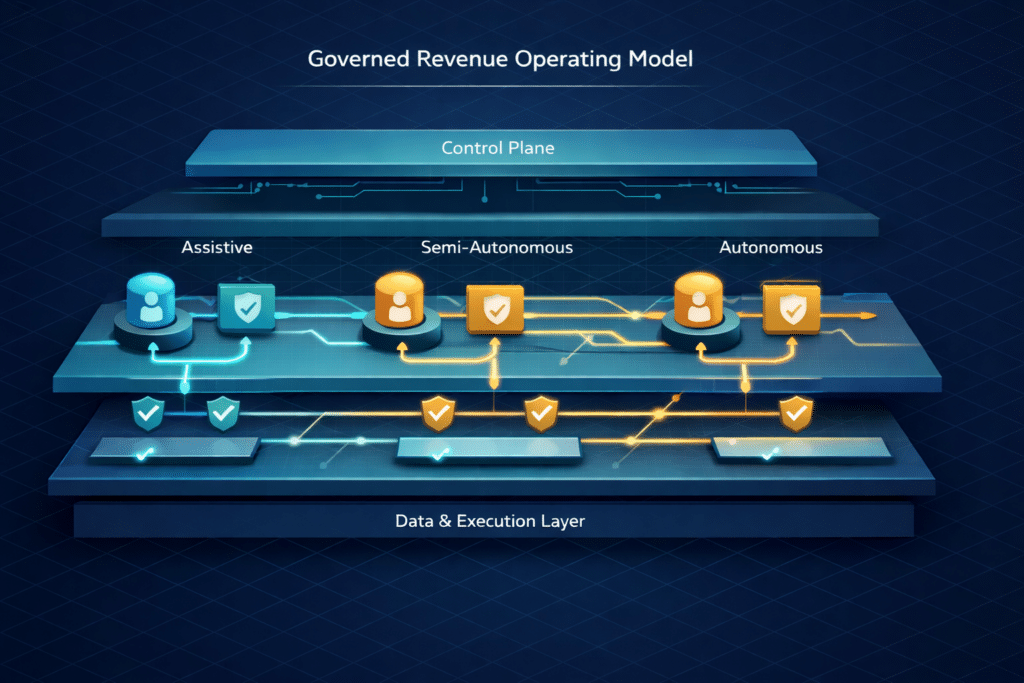
They make decision rights between humans and agents explicit. They introduce autonomy gradually, earning trust over time rather than demanding it at go-live.
And they focus on adoption as behaviour change, not feature usage.

The Leadership Imperative
Leaders cannot delegate change management.
When leaders remain ambiguous about agent-based revenue models, teams read that ambiguity as permission to revert. Visible executive sponsorship — of decision boundaries, accountability, and new ways of working — is what makes agentic revenue stick.
Executive Takeaway
Revenue transformation fails when organisations automate execution without first designing how decisions are made. Effective transformation requires leaders to:
- Make decision rights explicit across humans and agents
- Introduce autonomy progressively, with trust earned over time
- Embed governance upstream in the operating model, not after execution
When behaviour, governance, and systems are designed together, transformation becomes durable.
When they are not, teams revert to workarounds — regardless of how advanced the technology is.
This is the design principle behind how Trigg helps organisations build governed, agent-ready revenue operating models — where change is engineered into the system, not left to chance.