
ERP vs ARM: Who Should Control Revenue?
February 19th, 2026 Posted by Steve Paul AI, Insights, Revenue Management, Sales, Sales Automation 0 thoughts on “ERP vs ARM: Who Should Control Revenue?”Every Enterprise Resource Planning (ERP) vs Agentforce Revenue Management (ARM) revenue control debate eventually lands in the same place:
“Shouldn’t ERP just handle this?”
It’s a logical instinct, because fewer systems feel safer and control feels clearer.
In practice, this assumption is one of the most common reasons revenue transformations stall.
The Problem Isn’t ERP — It’s Role Confusion
ERP systems are built to protect the business. They deliver accounting accuracy, compliance, and auditability. They create financial truth.
They are not designed to govern commercial decision-making.
When ERP is pushed into roles it was never built for — dynamic pricing, deal flexibility, customer-specific exceptions — organisations pay the price in slow change, brittle customisation, and frustrated commercial teams.
This isn’t a technology failure.
It’s an ownership failure.
We see this pattern repeatedly in large-scale commercial programmes, particularly where ownership of pricing and deal logic is unclear — a theme we explore further in Why Most CPQ Programmes Fail at Scale.
This is the core misunderstanding at the heart of the ERP vs ARM revenue control conversation.

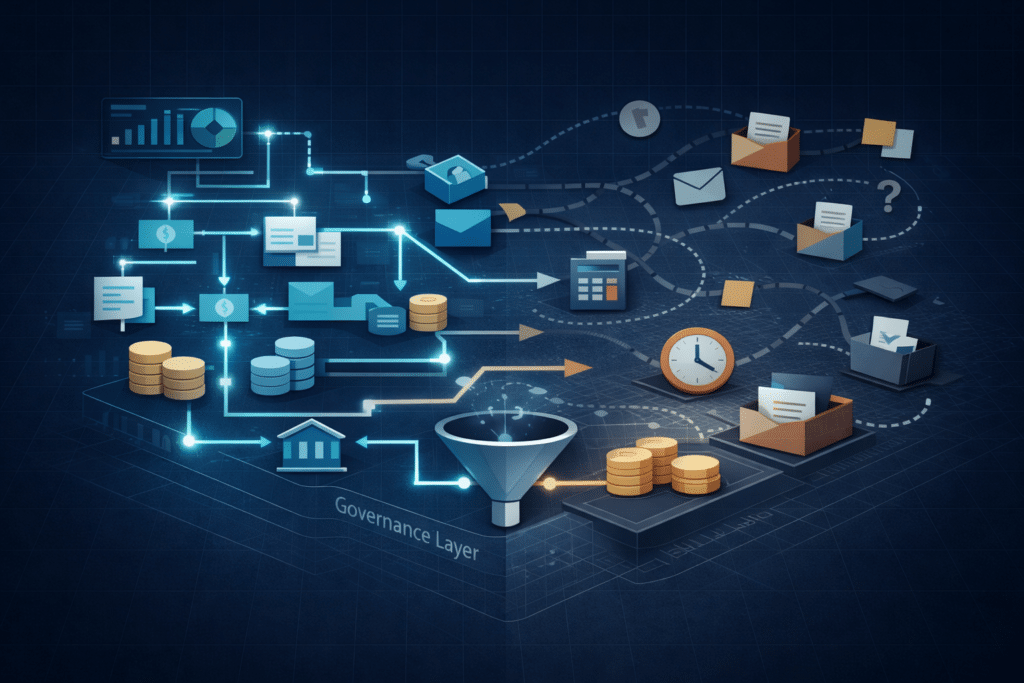
Revenue Has Two Control Requirements
At its core, revenue operates across two distinct domains.
One is commercial: intent, negotiation, flexibility, speed.
The other is financial: recognition, compliance, certainty.
As a result, trying to force both into a single control point creates tension rather than clarity. Sales teams push for agility. Finance teams push for control. The system becomes the point of conflict.
What boards experience as “complexity” is often simply unclear ownership inside the architecture.
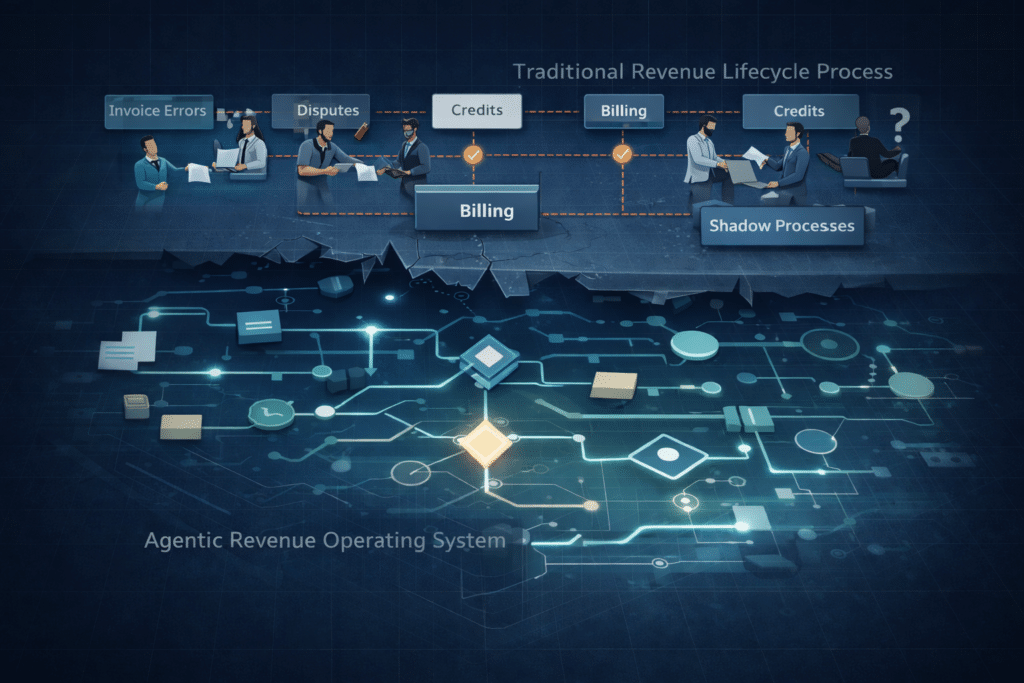
This is why revenue is no longer just a workflow — it is an operating model in its own right, as outlined in Revenue Is No Longer a Process — It’s an Operating System.
What High-Performing Revenue Models Do Differently
In practice, the most effective revenue organisations separate responsibility cleanly.
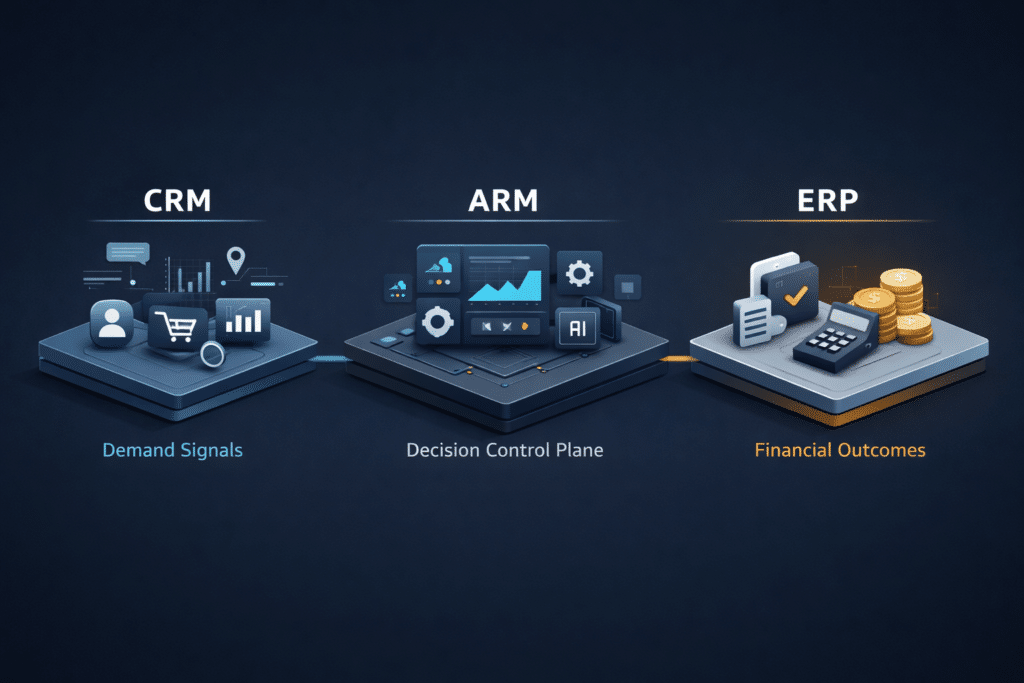
CRM captures demand and customer context.
ARM governs commercial intent, pricing logic, and policy.
ERP executes financial truth.
Each system does what it’s best at — no more, no less.
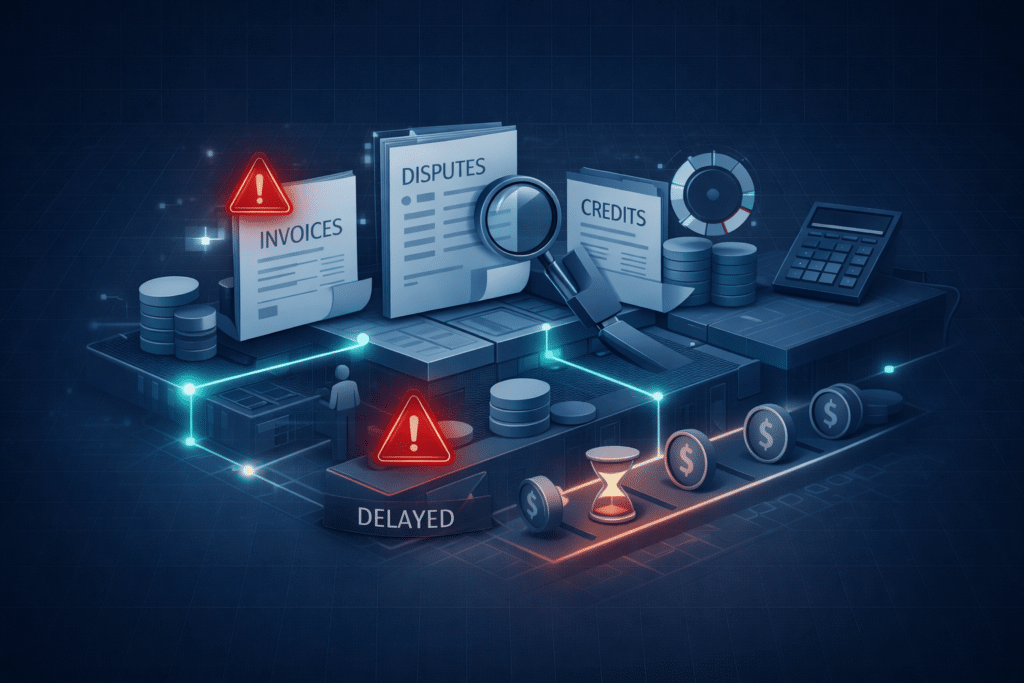
This separation reduces delivery risk, accelerates change, and builds trust between commercial and finance teams. It also avoids the downstream failures that often appear when billing and recognition are forced to absorb commercial complexity — a breakdown we unpack in Billing Is Where Revenue Transformations Go to Die.
In an ERP vs ARM revenue control model, this separation is what allows speed and governance to coexist.
Why This Matters Even More With AI and Agents
As organisations introduce AI and agent-led workflows, ambiguity becomes a liability.
By design, agents move fast. If logic is duplicated or ownership is unclear, errors scale quickly and accountability becomes harder to trace.
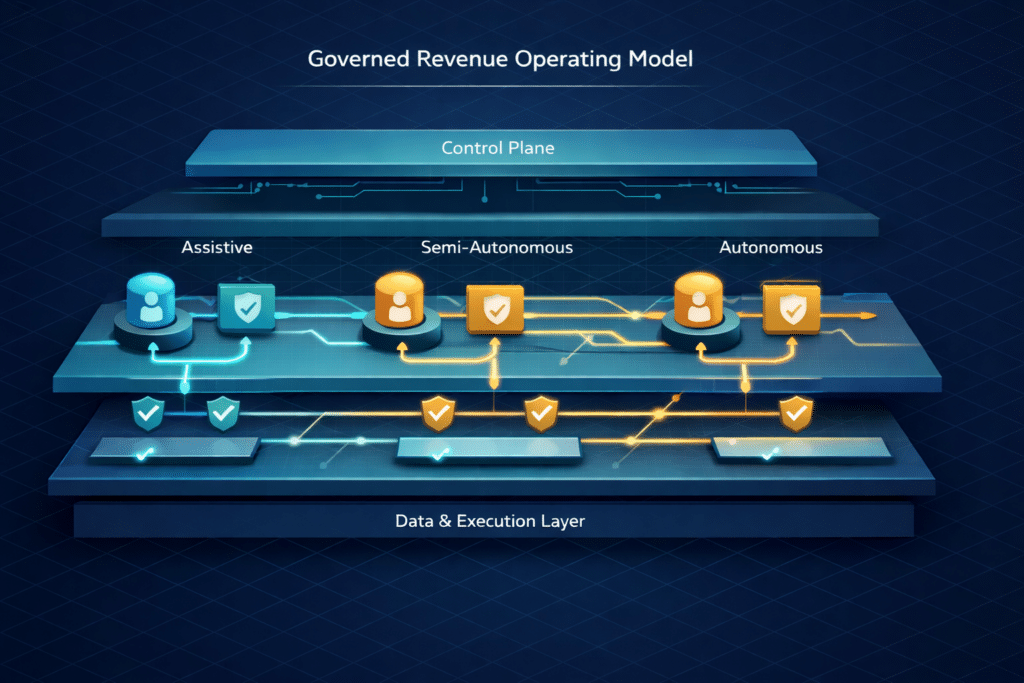
In this world, ARM acts as the control plane — ensuring decisions remain within defined commercial guardrails before execution in ERP.
ERP remains the system of record, while ARM becomes the system of decision.
That distinction is what enables speed without sacrificing control.
There Is No Universal Architecture
Some organisations extend their existing stack. Others replace specific components. Many land somewhere in between.
The right answer depends on how your business sells, how much flexibility you need, and where governance must sit.
At Trigg, we help leadership teams design revenue operating systems that reflect reality — complementing existing technology where it works, and replacing it where it doesn’t.
The goal is not consolidation for its own sake. Instead, it is clarity.

Executive Takeaway
Ultimately, ERP is essential to revenue transformation.
However, it is not the control plane.
Treating it as such slows innovation and increases risk — the opposite of what leaders intend.
The goal is not fewer systems. Rather, it is clear responsibility, governed autonomy, and a revenue operating model built for scale.
Designing Your Revenue Control Plane
Every organisation starts from a different place.
Some need clearer ownership across CRM, ARM, and ERP.
Others need to modernise legacy commercial layers.
Many need an operating model that is ready for AI-driven execution.

At Trigg, we help organisations define and implement revenue operating systems that scale — with governance designed in from day one.
If you’re reassessing revenue architecture, start with clarity — not consolidation.